By Rexploitation
Let’s get something straight before the torches come out and the social media guillotines start dropping:
horror has never been polite, safe, or ideologically obedient.
So when I hear horror fans—or worse, horror influencers—lining up to cheer censorship, I don’t just scratch my head. I feel like I’m watching a vampire voluntarily invite the stake.
And that brings us to Joe Bob Briggs.
Every few years, someone digs up an old article, an old tweet, or an old opinion and asks the same tired question: “Is Joe Bob Briggs alt-right?”
Short answer: no.
Long answer: you’re asking the wrong damn question
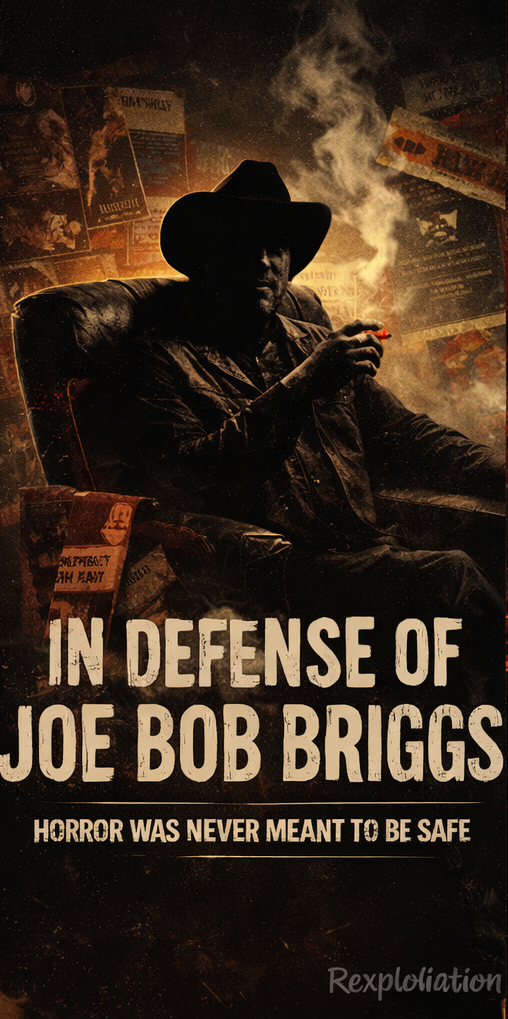
Joe Bob’s Crime: Refusing the Club
The 2020 article making the rounds again—“Joe Bob’s America: Only Nazi Misogynists Watch Chopping Mall”—wasn’t a manifesto. It was satire. It was media criticism. It was Joe Bob doing what he’s always done: poking sacred cows and refusing to kneel.
What actually triggered the outrage wasn’t ideology. It was defiance.
Joe Bob didn’t apologize the “right” way.
He didn’t recite the approved bromides.
He didn’t declare allegiance to a political tribe.
And in the modern internet, that’s the real sin.
As Joe Bob himself made painfully clear, he’s not a Democrat, not a Republican, not a conservative, not a liberal, not a feminist, not an anti-feminist. He doesn’t want a club jacket. He doesn’t want a purity badge. He wants to talk about movies—including the messy, uncomfortable parts.
That refusal drives people nuts.
Horror Has Always Been Suppressed—By Everyone
Here’s the part a lot of younger fans miss.
Horror didn’t start getting censored in 2016.
It didn’t start with Twitter.
It didn’t start with “cancel culture.”
Horror has always been hunted.
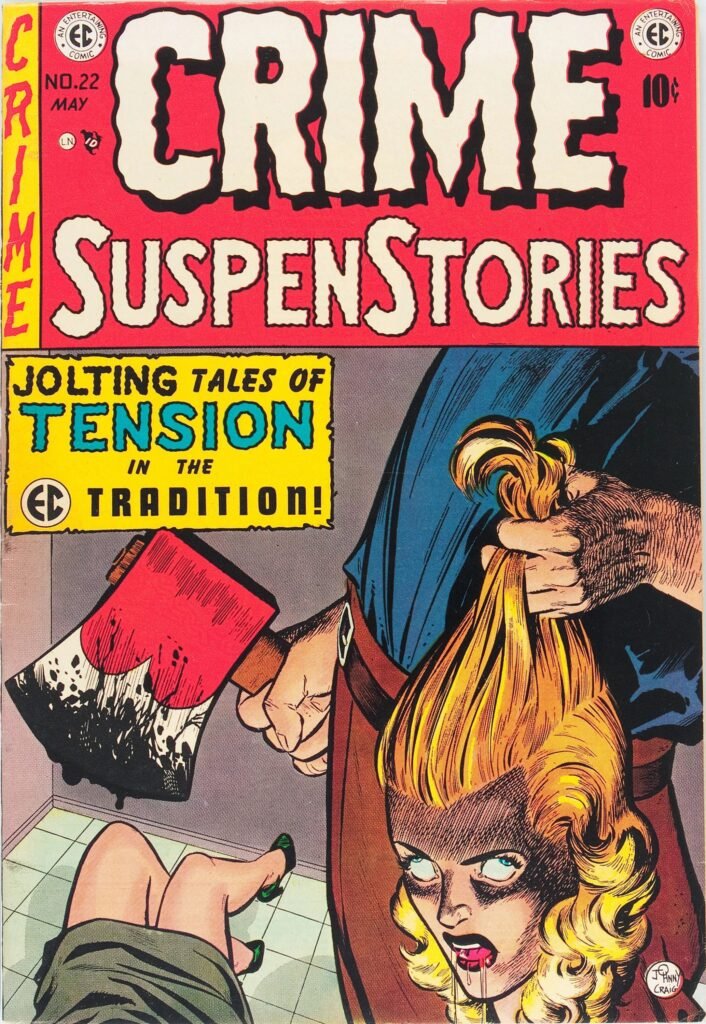
• The Comics Code Authority gutted horror comics in the 1950s
• Religious groups tried to burn VHS tapes in the 1980s
• Politicians blamed slasher films for crime
• Video games were dragged into Senate hearings
• Streaming platforms quietly bury content today
• TikTok shadow-bans creators for showing a plastic skeleton
Different decade. Same fear.
So when horror fans side with censorship—no matter how righteous they think their reasons are—it’s historical amnesia bordering on betrayal.
You don’t get to enjoy Texas Chain Saw, Last House, Maniac, Chopping Mall, or Re-Animator and cheer for the people who want to sanitize art into beige mush.
Pick one.
Satire Isn’t Violence—But Censorship Is
Joe Bob’s long-standing philosophy of satire is old-school and brutal:
satire shoots in every direction, including back at the speaker.
That doesn’t make it cruelty. It makes it honest.
The real danger isn’t offensive speech.
The real danger is deciding who gets to speak at all.
Once you normalize punishment for “wrong” opinions, you don’t control where that line moves. Horror knows this better than any genre. We’ve lived on the wrong side of that line for decades.
Today it’s Joe Bob.
Tomorrow it’s you.
Especially if you’re a content creator.
Why This Matters Now—Especially Online
If you think horror is free today because it exists on TikTok or YouTube, you’re not paying attention.
Creators get flagged.
Videos get buried.
Accounts disappear without explanation.
Algorithms don’t care about nuance.
Platforms don’t care about context.
And mobs don’t care about history.
That’s why defending Joe Bob Briggs isn’t about agreeing with every word he’s ever written. It’s about defending the right of horror to be uncomfortable, contradictory, and unfiltered.
Final Word from an Old Ghoul
Joe Bob Briggs isn’t alt-right.
He isn’t left-wing.
He isn’t your mascot.
He’s a reminder of a time when horror didn’t beg permission.
If you love horror but support censorship, you’re standing on the wrong side of the grave.
And if that makes you uncomfortable?
Good.
Horror is doing its job.